
The Boring Stack: Why I Don't Use the Newest Framework
Next.js, Payload, Postgres, Vercel, Cloudflare. No new database, no experimental runtime, no framework released last month. A deliberate argument for choosing tools that will still be supported in five years.
Every six months, a new framework or database or runtime becomes "the thing." A new way to build web apps that solves the problems of the previous way and introduces new problems nobody's hit yet. I don't use those. Not because I'm not interested, but because the clients I work with are running small businesses, and a small business can't afford to be the beta tester for someone else's architecture.
What I use, and why
Next.js — a React meta-framework with years of production usage, an enormous ecosystem, and a vendor (Vercel) whose entire business depends on it staying stable. It's not the most exciting choice, but it's the one that will still be supported when I hand a project off to a client and they don't touch it for three years.
Payload CMS — a headless CMS that runs inside Next.js, gives the client an admin panel that looks and feels like a normal CMS, and generates TypeScript types from the schema. The choice was mostly driven by the admin experience — a client should be able to edit their own content without a developer.
Postgres — the database that has been in active development since 1986. There is no serious argument for using anything else at small-business scale. New databases come and go; Postgres doesn't.
Vercel — hosting that scales to zero and serves static pages from a global CDN. The pricing model means a small site costs almost nothing. The trade-off is that the company could change its pricing, which is why the site is not locked in to Vercel — the same code runs on Netlify, Cloudflare Pages, or a self-hosted Node server.
Cloudflare — the edge layer. WAF, bot filtering, rate limiting, caching. The only piece of the stack that specifically exists because of the bot problem. If Cloudflare disappears tomorrow, the site still works; it just works less well against automated traffic.
The boring stack is a customer-service decision
When I hand a site over, I want the client to be able to hire any competent developer to maintain it. That developer should recognise every piece of the stack. They shouldn't have to learn a new runtime or debugging tool or deployment pipeline. Next.js, Postgres, and Cloudflare are all hireable — there are thousands of developers who know them.
The newest frameworks aren't. If I build a site on the framework released six months ago, and the client wants to move on in two years, they're dependent on the small pool of people who chose to learn that framework. That's a form of lock-in that's harder to see than a proprietary CMS but just as real.
What "boring" doesn't mean
It doesn't mean the site is plain. The KetoBible site is fast, visually distinct, and has features (search, category filtering, recipe indexing) that were plugins on WordPress and are now natively part of the code. The stack being boring is about the foundation, not the output.
It also doesn't mean the site is static. Payload runs the admin panel dynamically; the frontend is statically generated but can be re-rendered on demand. Postgres is doing real database work. The stack is modern; it's just not new. Those are different things.
Related posts


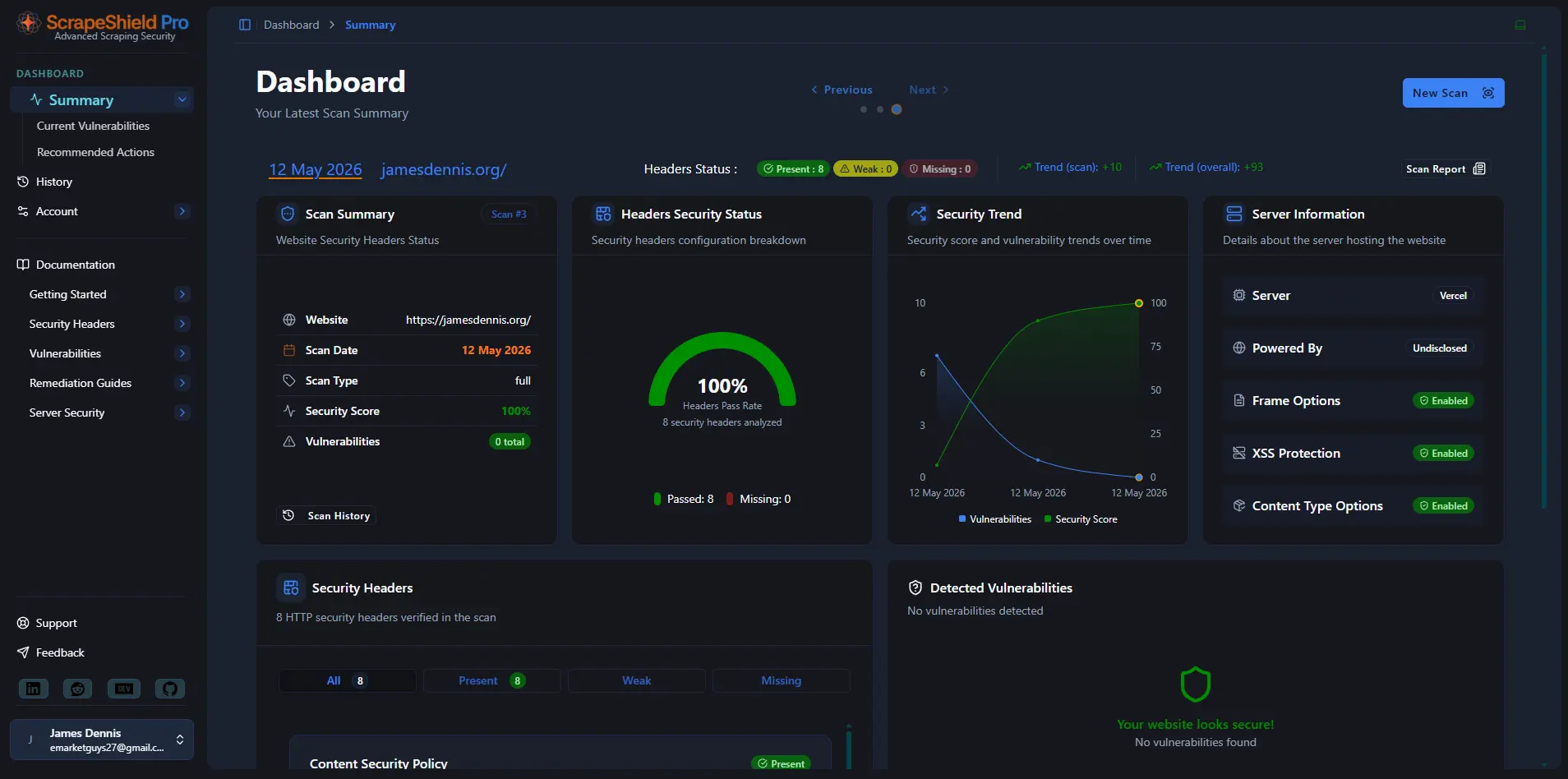

Is your site being scraped?
ScrapeShield analyses your traffic to reveal bots, scrapers, and AI crawlers in real time. See who is accessing your content, how often, and from where — then decide what to do about it.


No spam - ever..! Just the latest articles, fixes, and advice - direct to your inbox.